September 26, 2018
LET’S GET TO KNOW TEMPE PRODUCERS
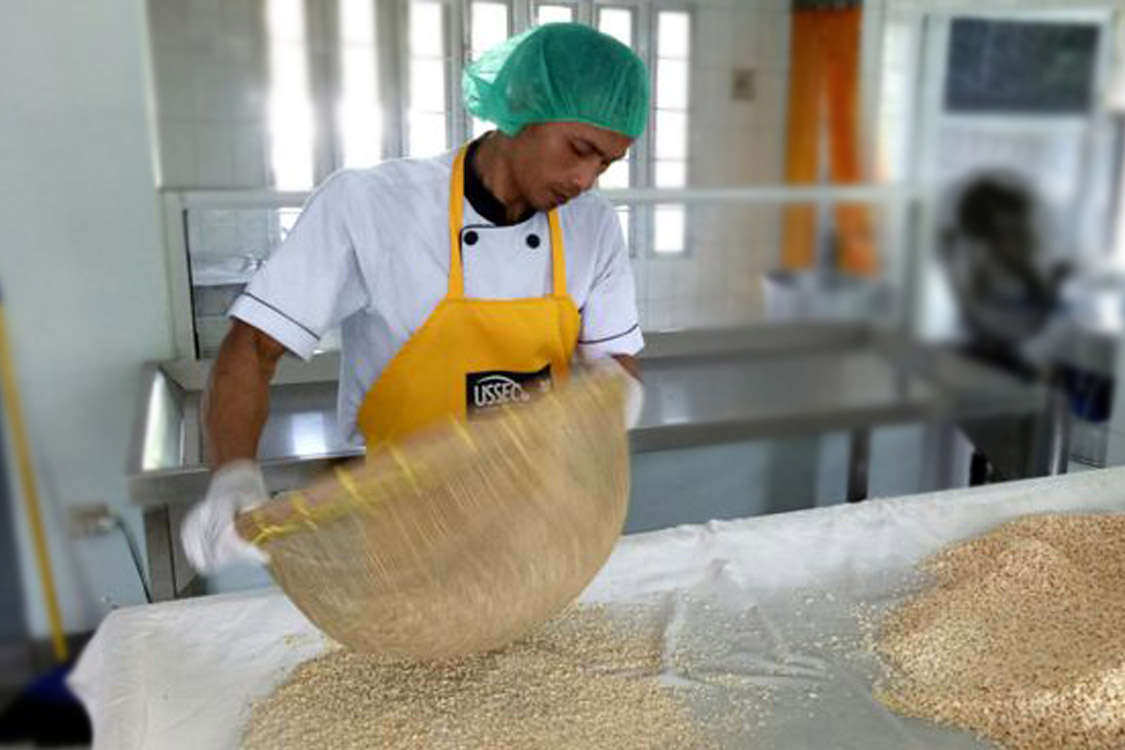
Have you ever thought about getting to know more about the people behind tempe making? Who are they? What are the challenges?
In 2017, a study was conducted on 197 tempe producers in Bogor, Semarang and Medan. On average, tempe producers have been running their business for 14 years and one third of them run tempe businesses due to the inheritance of the family business. In a day, they process soybeans as raw material for tempe as much as 50-100 kg. To process the soybeans, the producers employ 2 workers, the majority of whom are male workers and still have family relations with business owners. There are also producers who employ female workers who are usually responsible for packaging. Workers get daily, weekly or monthly wages. The producers generally sell tempe directly to consumers, for example in traditional markets, fried vendors, housewives, warungs, boarding schools or hospitals. Direct selling method allows producers to get money directly. There are some producers who sell to third parties, such as shops and minimarkets, supermarkets, or food industries. Sales to third parties allow producers to sell tempe in large quantities and are more practical. In addition, there are also producers who sell directly and through third parties because they want to get large sales and diverse consumers.
Tempe producers get soybeans through distributors (72%) or KOPTI (18%). KOPTI is an Indonesian Tofu and Tempe Producers Cooperative. Two important things in tempe industry as outlined by producers are production and marketing. In terms of production, the producers want to increase production, improved equipment, improved workplaces and improve hygienic production processes which save time and effort. In terms of marketing, producers want to expand their marketing targets. To increase production and marketing, producers need credit assistance, which can be obtained from banks, KOPTI, friends/relatives, or share costs with the food industry partner. Currently there are tempe making equipment that can help the production of hygienic and time-saving production processes, such as boiling tanks from stainless steel that are easy to operate, thus saving energy, milling machines that can separate soybeans from its skin, and automatic tempe packaging.
The main challenges faced by tempe producers were marketing strategies (36%), soybean prices (21.1%), capital (19.9%), weather (16.1%), production processes (12.4%), equipment (6.8%), and others (21.7%). Therefore, producers need support in terms of capital (60.4%), technology and equipment (47.7%), information (35%), and training (32.5%). The Indonesian Tempe Forum (FTI) has consistently provided training on hygienic tempe production processes to tempe producers throughout Indonesia since 2014. Tempe processed hygienically provides safety assurance for the community. Currently more and more hygienically produced tempe are available on the market.
Summarized from: Wiradnyani et al. (2016). Socio-economic challenges and opportunities for tempe industry: A situational analysis in selected cities of Indonesia.